By Samuel Abasiekong-Abasiekong
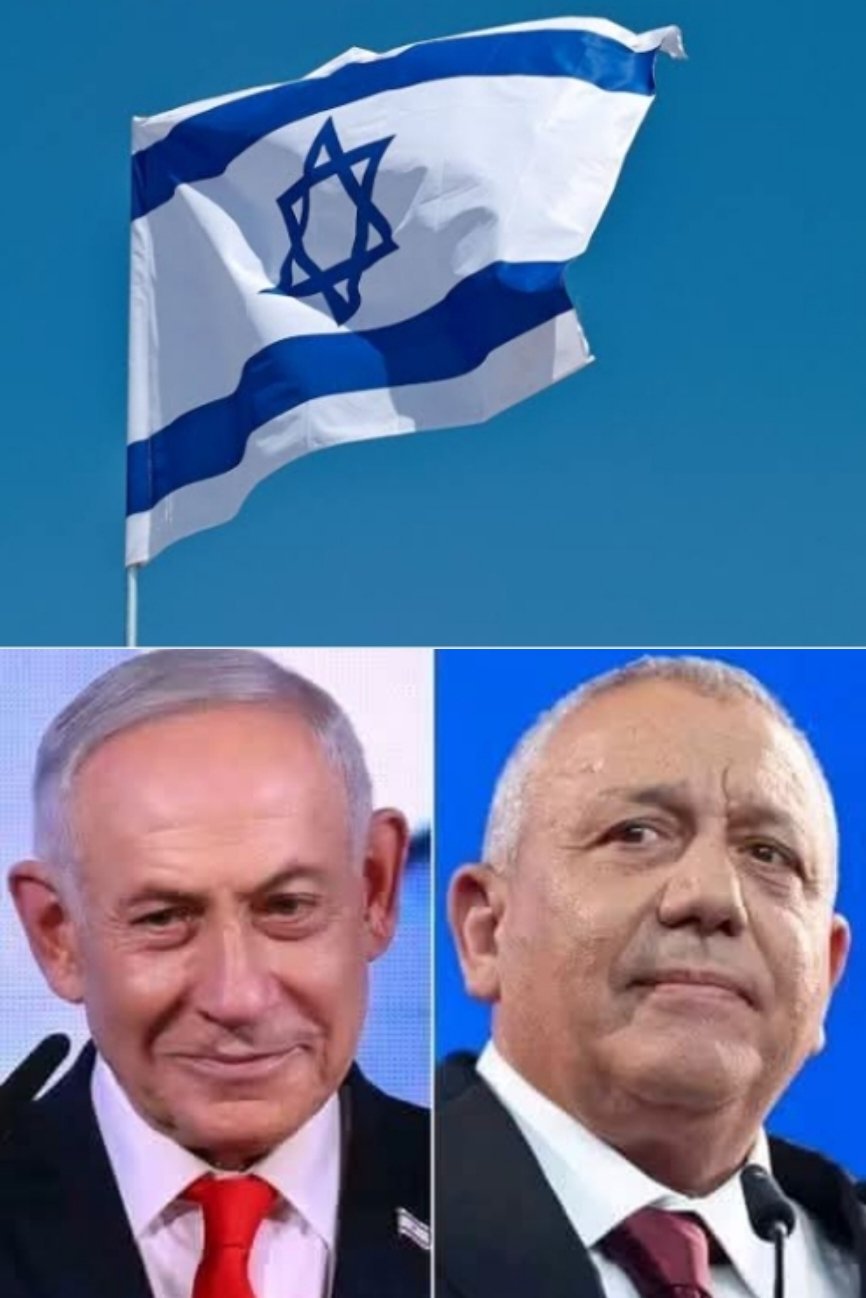
UYO, Nigeria — Claims circulating on social media that Israeli Prime Minister Benjamin Netanyahu and opposition leader Gadi Eisenkot have reached an agreement to establish a national unity government have not been substantiated by credible reports.
Although the possibility of a unity government has featured in discussions following Israel’s October 27, 2026, parliamentary elections, there is no verified announcement confirming that Netanyahu and Eisenkot have agreed to share power.
Available evidence instead points to a complicated political deadlock, with both political camps struggling to secure the parliamentary numbers required to establish a new government.
Election produces political deadlock
Preliminary election figures indicate that Netanyahu’s Likud-led political bloc secured 53 seats in the 120-member Knesset, Israel’s parliament.
The opposing bloc, led by former Israel Defence Forces (IDF) Chief of Staff Gadi Eisenkot and his centrist Yashar party, secured approximately 48 seats.
Arab-led political parties won the remaining 19 seats, potentially making them decisive in determining which political camp eventually forms the next government.
Neither of the two major political blocs has secured the 61 seats required for an outright parliamentary majority.
The election results have consequently created uncertainty over who will command sufficient support to form Israel’s next government.
A Congressional Research Service report published on October 30 identified a possible power-sharing arrangement between Netanyahu and Eisenkot as one of several scenarios that could emerge from the political stalemate.
However, the report presented it as a possibility, not an agreement already reached by the two politicians.
Eisenkot previously rejected Netanyahu-led unity government
One of the strongest pieces of evidence contradicting the viral claim is Eisenkot’s public position on working under Netanyahu.
On October 21, 2026, Eisenkot explicitly declared that he would not serve in a government led by Netanyahu, even if the arrangement involved rotating the position of prime minister.
Speaking to Radio 103FM, the former military chief reportedly said he would resign immediately if such an arrangement were reached.
Eisenkot also made clear that although he did not completely rule out cooperation with Netanyahu’s Likud party, he would not serve alongside Netanyahu because of the prime minister’s responsibility for the October 7, 2023, Hamas-led attacks on Israel.
The statement was particularly significant because it directly addressed speculation that the two politicians could establish a unity government after the election.
Netanyahu’s political calculations
Netanyahu, who has dominated Israeli politics for decades, faces a difficult political calculation.
His Likud party emerged as the largest individual party in the October election, but its wider political bloc failed to secure a parliamentary majority.
A unity arrangement with Eisenkot could potentially provide a way out of the political deadlock.
However, such an agreement would require Netanyahu to make substantial concessions, including reconsidering his relationship with traditional right-wing coalition partners.
According to a Ynet report published on November 1, senior Likud figures consider the prospects of a unity government extremely slim because of the political concessions both sides would have to make.
A unity arrangement could also require Netanyahu to exclude influential far-right politicians, including National Security Minister Itamar Ben-Gvir and Finance Minister Bezalel Smotrich.
Eisenkot seeks alternative coalition arrangements
Rather than announcing an agreement with Netanyahu, Eisenkot has been working to consolidate support among opposition parties.
Following the election, he met opposition leader Yair Lapid to coordinate their next political steps.
Eisenkot has also outlined four fundamental principles for any political party or lawmaker seeking to participate in his proposed government.
These include recognition of Israel as a Jewish and democratic state, commitment to the country’s Declaration of Independence, universal military or national service, and recognition of Hamas as a terrorist organisation whose military and governing capabilities in Gaza must be dismantled.
He has also proposed establishing a state commission of inquiry into the October 7 attacks, reversing controversial judicial overhaul legislation and introducing more equitable military conscription.
His immediate challenge, however, is securing enough parliamentary support to translate these proposals into a functioning government.
Arab parties complicate government formation
Another important aspect of the emerging political situation concerns the role of Arab-led parties.
The viral publication claims that Netanyahu and Eisenkot have agreed that no Arab political party should participate in their proposed coalition.
However, there is no verified evidence of such an agreement.
Eisenkot has previously expressed reservations about including Arab parties in a government he leads, particularly where they do not accept his stated conditions.
Nevertheless, other opposition politicians have adopted different positions.
Yair Golan, leader of the Democrats party, has advocated a government that could receive support from Arab lawmakers, including the Joint List and the Ra’am party.
The distinction is important because parliamentary support from outside a governing coalition is different from formally joining the government.
The Arab parties’ combined 19 seats could therefore become critical in determining the outcome of the negotiations.
Unity government remains a possibility, not an accomplished fact
Israel’s political history provides examples of national unity arrangements emerging from prolonged electoral deadlocks.
The possibility of another unity government has therefore attracted attention, particularly because neither Netanyahu’s bloc nor Eisenkot’s opposition camp has secured the numbers needed to govern independently.
President Isaac Herzog is expected to play an important constitutional role in the government-formation process.
Under Israel’s parliamentary system, the president assigns a lawmaker the responsibility of attempting to form a government after consultations with political parties.
The Congressional Research Service has identified a possible Netanyahu-Eisenkot power-sharing arrangement as one of the options that could emerge from the current impasse.
However, it also identifies other possibilities, including an Eisenkot-led government supported by parties outside his immediate political bloc.
Until formal negotiations produce an agreement and the necessary parliamentary support is secured, claims that a new unity government is already established remain premature.
What happens next?
The immediate political question is whether Israel’s competing political camps can overcome their differences and produce a government capable of commanding the confidence of the Knesset.
The new parliament is scheduled to convene on November 10, 2026, while the government-formation process is expected to dominate Israeli politics in the coming weeks.
For Netanyahu, the challenge is preserving his political influence without losing the support of his traditional allies.
For Eisenkot, it is translating the opposition’s electoral performance into a viable governing coalition without abandoning his central campaign commitment to ending Netanyahu’s premiership.
The bottom line is that discussions about an Israeli national unity government are real, but the claim that Netanyahu and Eisenkot have already agreed to form one within days is unsupported. As of November 1, 2026, Israel remains caught in a post-election political deadlock, not under a newly agreed Netanyahu-Eisenkot unity arrangement.
™️©️ Samuel Abasiekong-Abasiekong, CEO/EiC www.efeederstation.com