
By Samuel Abasiekong-Abasiekong
November 1, 2026 | Port Harcourt, Rivers State
A Rivers State High Court sitting in Port Harcourt has nullified the Rivers State House of Assembly’s arrest order against Professor Smith Jaja, Vice-Chancellor of PAMO University of Medical Sciences (PUMS), over the controversial state-funded scholarship programme.
The court also awarded ₦2 million in damages against the Rivers State House of Assembly and issued a perpetual injunction restraining the legislature, the police and other security agencies from interfering with Jaja’s constitutionally protected fundamental rights in connection with the matter.
Justice Frank Onyiri delivered the judgment on Friday, October 30, 2026, in a fundamental rights enforcement suit instituted by the university’s Vice-Chancellor.
The ruling represents a significant legal setback for the Assembly, which had ordered Jaja’s arrest following his failure to appear before an ad hoc committee investigating billions of naira allegedly disbursed to PAMO University under the Rivers State Government’s scholarship arrangement.
It also raises important constitutional questions about the limits of legislative investigative powers, the accountability of institutions receiving public funds and the protection of individual rights.
How the PAMO-Rivers Assembly controversy started
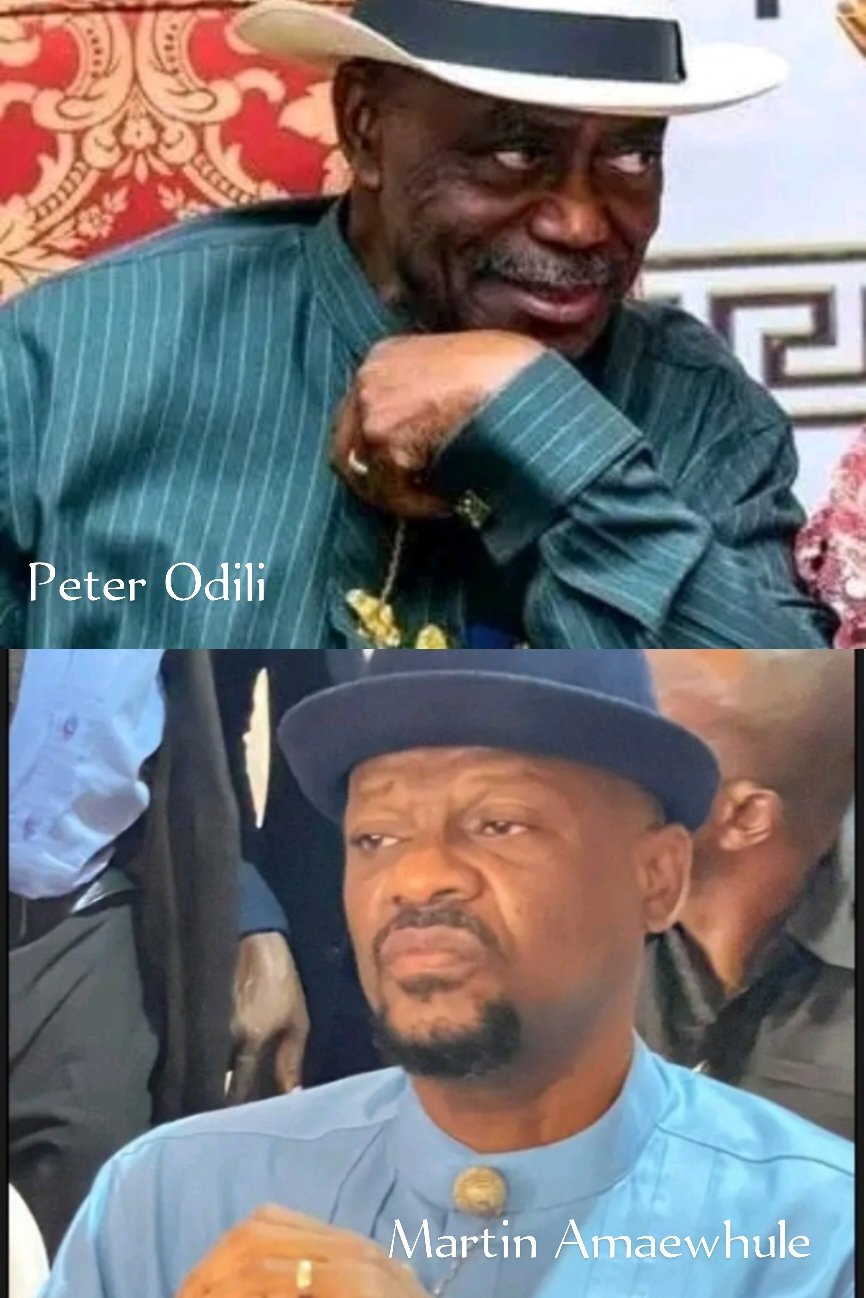
The dispute originated from the Rivers State Government’s scholarship arrangement with PAMO University of Medical Sciences, a private medical institution in Port Harcourt owned by former Rivers State Governor, Dr Peter Odili, who also serves as its Pro-Chancellor.
The arrangement provides educational sponsorship for qualified indigenes of Rivers State studying medical and health-related courses at the institution.
The controversy intensified in September 2026 when the Rivers State House of Assembly removed a proposed ₦6 billion allocation for the scholarship programme from the 2026 Appropriation Bill.
The Assembly, led by Speaker Martin Amaewhule, reportedly raised concerns about the transparency and accountability of funds released to the university under the arrangement since 2017.
On September 3, 2026, the House passed the state’s budget, which was subsequently assented to by Governor Siminalayi Fubara.
Following the removal of the proposed allocation, the Assembly established a seven-member ad hoc committee chaired by Deputy Speaker Dumle Maol to investigate the scholarship programme.
The committee was mandated to establish how much the university had received from the state government since the programme commenced, how the funds were utilised and the number of students benefiting from the arrangement.
It also invited the university’s Vice-Chancellor, the Accountant-General, the Commissioners for Finance and Education and other relevant government officials to provide explanations and supporting documents.
Assembly orders arrest of PAMO Vice-Chancellor
The confrontation escalated on September 25, 2026, when the Rivers State House of Assembly ordered the arrest of Professor Smith Jaja over his alleged failure to honour repeated invitations from the investigative committee.
The decision followed consideration of the committee’s report during the Assembly’s 53rd legislative sitting.
The lawmakers also urged the state government to establish a mechanism to recover any funds they considered unaccounted for and return such money to the state’s Consolidated Revenue Account.
The Assembly maintained that its action was supported by Sections 128 and 129 of the 1999 Constitution, which provide for legislative investigations and the powers to summon witnesses and obtain relevant evidence.
The arrest directive brought the dispute into a more serious legal confrontation between the university and the legislature.
PAMO challenges the Assembly’s authority
PAMO University rejected the Assembly’s position and questioned the legality of the investigation.
The university, through its Registrar, Peter Akubuiroh, explained that it had initially attempted to cooperate with the committee by sending an official representative on September 16.
However, it alleged that the committee refused to recognise its representative or accept documents submitted on behalf of the institution.
The university also accused the lawmakers of making public allegations of financial mismanagement before establishing the facts.
It maintained that the state government did not directly appropriate funds to the private university.
According to PAMO, the scholarship funds were channelled through the Rivers State Ministry of Education and other relevant government agencies to meet the state’s financial obligations to eligible students.
The institution further maintained that it had fulfilled its obligations under the Memorandum of Understanding governing the scholarship programme.
It disclosed that approximately 600 Rivers State scholarship beneficiaries were enrolled at the university, studying courses including Medicine and Surgery, Nursing Science, Medical Laboratory Science, Radiography, Pharmacology, Anatomy, Physiology and Biochemistry.
PAMO also claimed that it had continued providing tuition, accommodation, feeding and other educational services to the students despite outstanding payments for approximately four months.
The university described the investigation as politically motivated and expressed concern that the controversy could disrupt the academic programmes of its scholarship beneficiaries. These remain the university’s claims and have not been independently established by the reported judgment.
Court initially restrains police from arresting Jaja
Before the latest judgment, Professor Jaja had approached the Rivers State High Court to enforce his fundamental rights.
The case was registered as Suit No. PHC/3692/FHR/2026 under the Fundamental Rights (Enforcement Procedure) Rules, 2009.
On September 30, Justice F. Onyiri issued an interim order restraining the Inspector-General of Police, the Rivers State Commissioner of Police and other security personnel from arresting, detaining or forcibly compelling the Vice-Chancellor to appear before the Assembly’s committee.
The interim order was specifically intended to remain effective pending the determination of the substantive fundamental rights application.
The development was reported on October 1, marking an important stage in the legal confrontation.
The October 30 judgment has now moved the dispute beyond that initial interim protection to a substantive judicial determination, according to the reports of the proceedings.
What the October 30 judgment decided
In his October 30 judgment, Justice Frank Onyiri reportedly held that the Rivers State House of Assembly exceeded its constitutional authority in the manner it pursued the investigation and sought to enforce the arrest directive against the Vice-Chancellor.
The judge faulted the establishment of the ad hoc committee under Section 128 of the Constitution after the 2026 Appropriation Act had already been passed and signed into law.
He reportedly described the investigative exercise as a sham.
The court also held that the Assembly had no authority to indict individuals or determine their guilt, explaining that its constitutional investigative powers were restricted to purposes recognised by the Constitution.
Consequently, the judge nullified the Assembly’s decision to arrest Jaja for failing to appear before the committee on September 25.
The court further affirmed the Vice-Chancellor’s entitlement to the protection of his fundamental rights under the Nigerian Constitution and the African Charter on Human and Peoples’ Rights.
The perpetual injunction restrains the Assembly, the police and other security agencies from interfering with his protected rights in connection with the dispute.
In addition, the court awarded ₦2 million in damages against the Rivers State House of Assembly in favour of Professor Jaja.
Understanding the constitutional issues: Sections 128 and 129
One of the most important aspects of the judgment is its interpretation of the constitutional powers of state legislatures.
Section 128(1) of the 1999 Constitution empowers a State House of Assembly to investigate matters within its legislative jurisdiction and the conduct of persons or institutions responsible for administering laws or disbursing public funds appropriated by the legislature.
However, Section 128(2) restricts those investigative powers to two principal purposes:
- Enabling the legislature to make laws within its constitutional jurisdiction and correct defects in existing legislation.
- Exposing corruption, inefficiency and waste in the execution of laws and administration of appropriated public funds.
Section 129 complements these provisions by empowering a House of Assembly or its authorised committee to obtain evidence, examine witnesses, administer oaths, summon individuals and, under specified conditions, issue warrants to compel attendance.
Therefore, the Constitution does recognise substantial investigative powers for state legislatures.
However, those powers are not unlimited and must be exercised within constitutional boundaries.
The distinction is particularly important in the PAMO controversy: the power to investigate public expenditure does not automatically confer judicial authority to pronounce an individual guilty of wrongdoing.
Does the judgment mean the Rivers Assembly cannot investigate PAMO again?
This is an important question arising from the judgment.
The reported decision should not automatically be interpreted as granting PAMO University permanent immunity from legislative scrutiny or accountability over public funds.
The Assembly retains its constitutional responsibilities concerning public expenditure, transparency and accountability.
However, any future investigation must comply with constitutional requirements, respect the rights of affected individuals and remain within the purposes for which legislative investigative powers were granted.
There is also an important legal distinction between investigating the administration of public funds and exercising judicial powers to determine criminal responsibility.
The court’s reported criticism of the timing and circumstances of the committee’s establishment is significant.
Nevertheless, without the complete certified judgment, it would be premature to conclude that the passage and signing of an appropriation law automatically prevent every subsequent legislative investigation into previously disbursed public funds.
Section 128 itself refers to funds already appropriated or intended to be appropriated.
The precise scope of the judge’s reasoning must therefore be understood from the actual judgment rather than isolated summaries of its conclusions.
The ₦29 billion scholarship controversy remains important
Another critical dimension is the amount of public money involved in the dispute.
Several reports put the scholarship funds under investigation at approximately ₦28 billion to ₦29 billion.
The Assembly’s investigation was intended to establish the amount released since 2017, identify beneficiaries and determine whether the money was properly utilised.
The proposed ₦6 billion allocation for 2026 further intensified the controversy.
However, the reported October 30 judgment awarding ₦2 million in damages did not, on the available reports, establish that all scholarship funds had been properly accounted for.
Equally, the Assembly’s allegations of financial mismanagement should not be treated as proven facts.
These are separate issues requiring documentary evidence, financial records and appropriate investigations.
The public interest therefore extends beyond the legal confrontation between the lawmakers and the Vice-Chancellor.
Parents, students, taxpayers and other stakeholders deserve credible answers concerning the management of the scholarship programme.
What the judgment means for Rivers State students
The controversy has implications for hundreds of Rivers State students whose medical education depends on the scholarship arrangement.
PAMO has claimed that approximately 600 beneficiaries are currently enrolled at the institution.
If outstanding scholarship payments remain unresolved, students could face uncertainty over tuition, accommodation, feeding and the uninterrupted continuation of their academic programmes.
The state government and the university therefore have a responsibility to ensure that the dispute does not become a burden on students who are not parties to the litigation.
The government must also clarify the status of the scholarship programme, outstanding obligations and the future funding arrangements.
A setback for the legislature, but not the end of public accountability
The judgment represents a significant setback for the Rivers State House of Assembly in its attempt to compel the PAMO Vice-Chancellor to appear before its investigative committee through the disputed arrest directive.
It also reinforces the principle that legislative authority must operate within constitutional limits.
However, the ruling should not be interpreted as a blanket endorsement of every financial transaction involving PAMO University.
Nor does the award of ₦2 million establish that the Assembly’s concerns about scholarship expenditure were necessarily without foundation.
The fundamental question of how public money was disbursed, who benefited and whether the scholarship programme achieved its intended objectives remains important.
The state government, the university and the legislature must provide transparent answers.
Conclusion: Accountability must operate within the rule of law
The PAMO University versus Rivers State House of Assembly controversy highlights the delicate relationship between legislative oversight, institutional independence, public financial accountability and fundamental human rights.
While elected lawmakers have a constitutional responsibility to investigate public expenditure, that responsibility cannot be exercised without regard to the Constitution and the rights of individuals.
Similarly, private institutions benefiting from government-funded scholarship arrangements should be prepared to demonstrate that public resources have been applied to their intended purposes.
The October 30 judgment sends an important message about constitutional limits on legislative power.
But the larger question of accountability for billions of naira committed to medical education in Rivers State must not disappear amid the legal victory.
Ultimately, Rivers State residents deserve both constitutional governance and transparency in the management of public resources.
™️©️ Samuel Abasiekong-Abasiekong, CEO/EiC www.efeederstation.com