By Samuel Abasiekong-Abasiekong
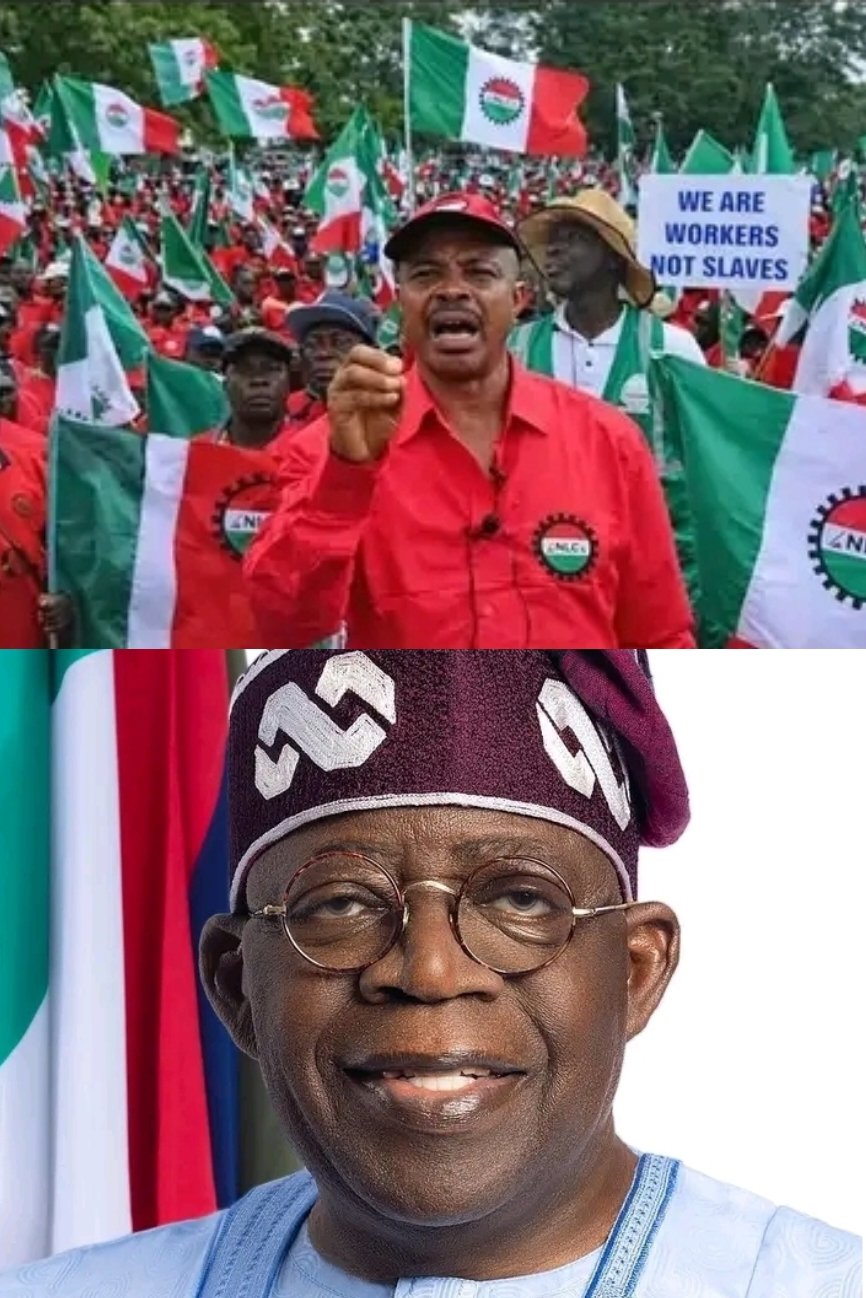
The Federal Government and organised labour, led by the Nigeria Labour Congress (NLC), have reached eight resolutions aimed at addressing workers’ welfare, outstanding salary-related entitlements and the rising cost of living in Nigeria.
The agreements, reached at a conciliation meeting in Abuja on October 27, 2026, include a monthly ₦70,000 transport intervention for six months, payment of outstanding peculiar allowance arrears and settlement of 19 months of unpaid allowances owed to health workers.
However, the negotiations have not resolved all the disagreements between the government and labour, particularly the effective date for implementing the national minimum wage.
The meeting was chaired by the Minister of Labour and Employment, Dr Muhammad Maigari Dingyadi, while the NLC delegation was led by its President, Comrade Joe Ajaero.
The resolutions were documented in a memorandum of understanding signed by representatives of both parties.
Here are the eight major resolutions and what they mean for Nigerian workers.
1. ₦70,000 Monthly Transport Intervention for Six Months
The Federal Government agreed to pay eligible public servants a monthly transport intervention of ₦70,000 for six months, beginning in November 2026.
The intervention is intended to cushion the impact of rising transportation costs and the broader economic hardship confronting Nigerian workers.
The agreement provides for payments across all levels. However, the memorandum does not provide a detailed breakdown of beneficiaries, payment arrangements or exact disbursement dates.
2. Payment of Outstanding Peculiar Allowance Arrears
The government approved the payment of outstanding peculiar allowance arrears with effect from May 1, 2026.
Disbursement is scheduled to commence in November 2026 and will be made in three equal monthly instalments.
The agreement is expected to benefit eligible public servants who are entitled to the allowance.
However, the government has not disclosed the total financial commitment or the individual amounts payable to beneficiaries.
3. Settlement of 19 Months’ Outstanding Health Workers’ Allowances
The Federal Government also agreed to clear 19 months of outstanding allowances owed to health workers.
The arrears are expected to be paid within three months, beginning in December 2026.
The commitment is significant for workers in Nigeria’s health sector, where disputes over remuneration, allowances and implementation of negotiated agreements have repeatedly generated industrial tensions.
Nevertheless, the memorandum does not disclose the total amount involved or the specific payment schedule for individual beneficiaries.
4. Immediate Commencement of Minimum Wage Renegotiations
Both parties agreed to establish a Minimum Wage Negotiation Committee to commence discussions immediately.
The proposed committee will be tripartite, comprising representatives of government, organised labour and employers.
However, the parties remain divided over the effective date for implementing the minimum wage arrangement under discussion.
This disagreement is particularly important because Nigeria’s current statutory minimum wage was increased from ₦30,000 to ₦70,000 in 2024 following negotiations between the government and organised labour.
President Bola Ahmed Tinubu signed the new National Minimum Wage Act into law in July 2024.
The latest agreement does not announce a new minimum wage figure. Rather, it provides for renewed negotiations and leaves the implementation date unresolved.
Consequently, Nigerian workers will have to await the outcome of the proposed negotiations before any new implementation timetable can be established.
5. Verification of Agricultural Officers’ Hazard Allowances
The government agreed to expedite the verification of outstanding hazard allowances for agricultural officers.
The Federal Ministry of Agriculture and Food Security has already submitted the list of beneficiaries and the associated financial implications to the National Salaries, Incomes and Wages Commission (NSIWC).
The commission is expected to complete the verification exercise within two weeks.
Following the exercise, NSIWC is expected to issue an implementation template to guide the payment process.
The agreement represents an important step towards addressing the welfare concerns of agricultural officers whose duties may expose them to occupational hazards.
However, payment will depend on the successful completion of the verification and subsequent implementation arrangements.
6. Review of CONHESS Salary Structure
The meeting also addressed the long-standing demand for an adjustment of the Consolidated Health Salary Structure (CONHESS).
The National Salaries, Incomes and Wages Commission is expected to complete an updated assessment of the financial implications of the proposed adjustment within three weeks.
The assessment will be forwarded for consideration by the Presidential Committee on Salaries.
CONHESS is an important remuneration framework for eligible health professionals in Nigeria’s public service.
The proposed adjustment has been a contentious issue involving health sector unions, particularly the Joint Health Sector Unions (JOHESU).
Although the latest resolution provides a timeline for reviewing the financial implications, it does not amount to final approval or immediate implementation of the proposed salary adjustment.
7. Tax Relief for Nigerian Workers
The possibility of introducing tax relief measures for workers was also considered during the negotiations.
However, the parties did not reach a final agreement on the proposed relief.
Instead, the issue was referred to the National Executive Council (NEC) for further consideration because taxation is a statutory matter.
The memorandum did not specify the proposed tax relief measures, the categories of workers that could benefit or when a final decision would be taken.
The issue is particularly important amid concerns that rising food prices, transportation expenses, housing costs and other deductions continue to weaken workers’ disposable income.
Any eventual tax relief would therefore need to be supported by appropriate legal and administrative measures.
8. One-Month Review of Implementation
The Federal Government and organised labour agreed to reconvene after one month to evaluate the implementation of the resolutions.
The proposed meeting is expected to assess progress on the transport intervention, payment of outstanding allowances, agricultural officers’ hazard allowances and other welfare-related commitments.
It will also provide an opportunity to address outstanding disagreements and determine whether the relevant government agencies have complied with the agreed timelines.
The memorandum further urged state and local governments to participate in the intervention process.
Trade unions were also encouraged to press for the implementation of the resolutions within their respective jurisdictions.
TUC Rejects ₦70,000 Transport Allowance, Demands Salary Increase
Despite the agreements between the Federal Government and the NLC, the Trade Union Congress of Nigeria (TUC) has expressed strong reservations about the proposed ₦70,000 monthly transport intervention.
The TUC, led by its President, Comrade Festus Osifo, argued that temporary wage awards and transport allowances cannot provide sustainable solutions to the economic difficulties confronting Nigerian workers.
In a statement issued on October 28, 2026, the congress called for an immediate and comprehensive salary increase rather than another temporary financial intervention.
The organisation argued that the government does not need to wait for negotiations on a new national minimum wage before increasing workers’ salaries.
It proposed that the Federal Government should consider raising the salary of its lowest-paid workers to ₦300,000 monthly, from the existing ₦70,000 statutory minimum wage, with corresponding adjustments across other salary grades.
The TUC also questioned the credibility of another temporary intervention, citing what it described as the incomplete implementation of the 2023 wage award.
According to the congress, some workers were still owed one or two months of the previous wage award, while others allegedly received nothing.
The TUC further accused the Federal Government of failing to fully implement its agreement with JOHESU concerning the CONHESS adjustment.
It demanded immediate implementation, a clear payment timetable and adequate budgetary provisions.
The disagreement highlights the fact that the latest NLC-Federal Government agreement does not represent a unanimous position among all organised labour formations.
N70,000 Transport Allowance Raises Questions About Implementation and Cost
Beyond the disagreements between labour organisations, the proposed transport intervention has also raised questions about its financial implications and coverage.
A report by The PUNCH estimated that the six-month intervention could cost approximately ₦465.7 billion if all 1.1 million employee records on the federal payroll system qualify for the payment.
The figure is an estimate based on the assumed number of beneficiaries, not an officially confirmed government budget.
The government has yet to publish a comprehensive breakdown of the beneficiaries and the administrative arrangements for disbursement.
There are also questions about how state and local government employees will benefit, given that the memorandum urges subnational governments to participate in the intervention.
The distinction is important because an agreement reached between the Federal Government and the NLC does not automatically establish that every state and local government has approved or funded the same payments.
What the Agreements Mean for Nigerian Workers
The eight resolutions represent an attempt by the Tinubu administration and organised labour to address growing concerns about workers’ welfare amid persistent economic pressures.
The ₦70,000 transport intervention and outstanding allowance payments could provide some immediate financial relief to eligible public servants.
However, the larger questions surrounding minimum wage renegotiations, tax relief, health sector remuneration and the implementation of existing agreements remain unresolved.
The effectiveness of the latest agreement will ultimately depend on whether the government honours its financial commitments within the stipulated timelines.
Equally important is whether state and local governments will adopt the proposed interventions for their employees.
For Nigerian workers, the central concern is no longer simply the number of agreements announced but whether those agreements will translate into improved living conditions, better purchasing power and more reliable remuneration.
The one-month review meeting will therefore be an important test of the commitment of both parties to the resolutions reached in Abuja.
Until the outstanding issues are resolved and the agreed payments begin to reach beneficiaries, the latest agreement should be regarded as a framework for intervention rather than evidence that Nigeria’s workers’ welfare challenges have been fully addressed.
™️©️ Samuel Abasiekong-Abasiekong, CEO/EiC @ www.efeederstation.com