By Samuel Abasiekong-Abasiekong
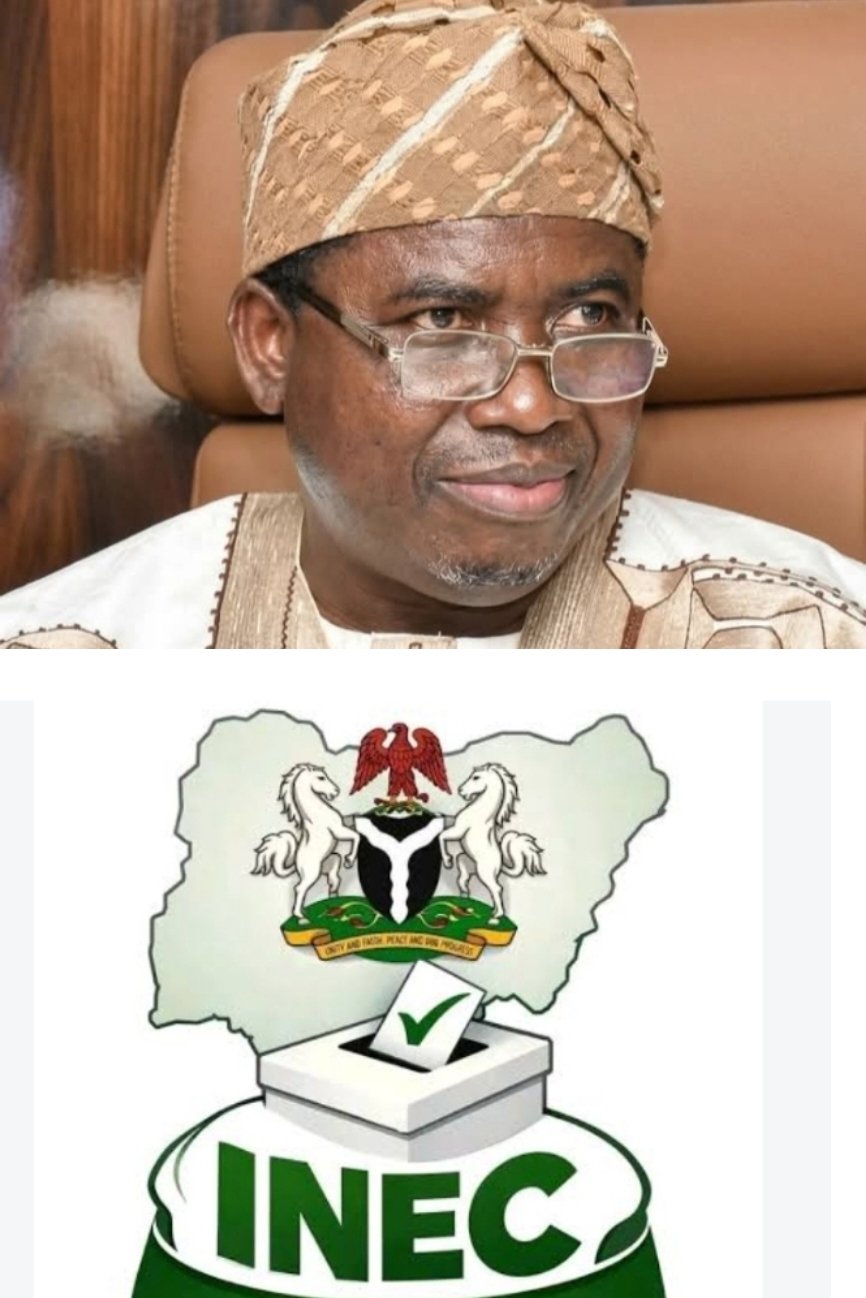
ABUJA — As Nigeria approaches the 2027 general elections, the credibility of the Independent National Electoral Commission (INEC), under its Chairman, Professor Joash Ojo Amupitan, SAN, is emerging as one of the most important questions confronting the country’s democracy.
Can Nigerians trust INEC to conduct a free, fair, transparent and credible election? Will the commission guarantee that every valid vote counts, protect the electoral process from political interference and ensure that election results reflect the actual choices of voters?
These questions have become increasingly significant amid renewed controversies surrounding the voters’ register, concerns about the commission’s operational preparedness, disagreements with opposition political parties and lingering public distrust following the disputed 2023 presidential election.
Although Amupitan has repeatedly promised institutional reforms, technological improvements and greater transparency, the commission faces the difficult task of convincing Nigerians that its assurances will translate into measurable improvements at polling units across the country.
The challenge is particularly important because the 2027 elections will be the first nationwide general elections conducted under his leadership.
WHO IS JOASH AMUPITAN, AND HOW DID HE BECOME INEC CHAIRMAN
Professor Joash Ojo Amupitan, SAN, was appointed Chairman of INEC following the departure of Professor Mahmood Yakubu, who led the commission from 2015 until October 2025.
President Bola Ahmed Tinubu nominated Amupitan on October 9, 2025, following the National Council of State’s approval of his appointment.
The Senate subsequently confirmed his nomination, and he was sworn in on October 23, 2025.
Amupitan is a professor of law at the University of Jos and a Senior Advocate of Nigeria. His areas of specialisation include corporate law, evidence, governance and legal administration.
He previously served as Deputy Vice-Chancellor (Administration) at the University of Jos, Dean of its Faculty of Law and Pro-Chancellor of Joseph Ayo Babalola University.
His academic and professional background provides considerable legal and administrative experience. However, electoral management requires more than academic qualifications and professional standing.
It requires political neutrality, institutional independence, administrative competence, operational discipline and the ability to withstand pressure from powerful political interests.
Ultimately, his success will be determined by the credibility of the elections conducted under his leadership.
NIGERIA’s ELECTORAL TRUST DEFICIT: AMUPITAN ADMITS THE PROBLEM
One of the most revealing developments under Amupitan’s leadership was his public acknowledgement that many Nigerians have lost confidence in the country’s electoral system.
On July 1, 2026, the INEC chairman described the trust deficit as one of the greatest threats to Nigerian democracy ahead of the 2027 elections.
Speaking while receiving the Director-General of the National Orientation Agency, Lanre Issa-Onilu, at INEC headquarters in Abuja, Amupitan identified voter apathy, public cynicism and electoral misinformation as major challenges.
He argued that investments in technology and improvements in election administration would achieve little if citizens continued to believe that their votes would not count.
His acknowledgement is significant because it suggests that the commission recognises that electoral credibility is not determined exclusively by the declaration of results.
It also depends on whether citizens believe the process is impartial, transparent and capable of protecting their democratic choices.
However, recognising the problem is different from solving it. Nigerians will expect the commission to demonstrate measurable improvements before, during and after the 2027 elections.
THE 2023 PRESIDENTIAL ELECTION: A LEGACY AMUPITAN MUST OVERCOME
Perhaps the greatest obstacle confronting the present INEC leadership is the controversy surrounding the 2023 general elections.
The presidential election generated widespread criticism following operational failures involving the Bimodal Voter Accreditation System (BVAS) and the INEC Result Viewing Portal (IReV).
The technology was introduced to strengthen voter accreditation, improve transparency and reduce opportunities for manipulation during the electoral process.
However, the delayed uploading of presidential election results to IReV generated public dissatisfaction and weakened confidence in the process.
The European Union Election Observation Mission identified the lack of transparency in the implementation of election technology and the failure to upload presidential results promptly as factors that reduced public trust.
Its preliminary assessment also identified late deployment of electoral personnel, delayed opening of polling units and shortcomings in the completion and public display of result forms.
Although the EU acknowledged the importance of the technological innovations, it noted that their implementation did not meet public expectations.
The experience remains an important warning for Amupitan.
Nigerians are unlikely to be satisfied with another round of assurances about electronic accreditation and results transmission without convincing evidence that the technology will work reliably under nationwide election conditions.
103 MILLIONS REGISTERED VOTERS: CAN INEC GUARANTEE AN ACCURATE REGISTER
Another major test of Amupitan’s credibility is the integrity of Nigeria’s National Register of Voters.
On October 5, 2026, Amupitan announced that the country’s registered voters had increased to more than 103 million following the completion of the Continuous Voter Registration exercise.
According to the commission, the three registration phases attracted 10,772,421 new registrants, subject to the relevant verification processes.
The figure represents a substantial increase from the 93,469,008 registered voters recorded before the 2023 general elections.
INEC also disclosed that it had completed an Automated Biometric Identification System cleanup to identify duplicate registrations and improve the accuracy of the database.
However, the preliminary voters’ register has recently generated fresh controversy.
Reports of questionable photographs and suspected artificial intelligence-generated images attached to some voter records circulated publicly, particularly concerning entries in parts of Edo State.
The controversy raised questions about the procedures used to capture, verify and upload voter information.
INEC subsequently acknowledged the concerns and announced an investigation into the circumstances surrounding the suspicious photographs and questionable records.
The commission explained that the preliminary register was still undergoing verification and correction before certification.
The development demonstrates why the credibility of the voters’ register cannot be established merely by announcing impressive registration figures.
A register containing more than 103 million names must be demonstrably accurate, free from duplicate entries, protected against fraudulent registrations and accessible for independent scrutiny.
On October 31, 2026, further information emerged about the verification exercise.
Amupitan disclosed that INEC had received more than 4,800 claims and approximately 600 objections to the preliminary register.
He said the commission would address valid complaints before certifying the final register on December 15, 2026.
The number of complaints does not automatically establish widespread fraud. Nevertheless, their proper investigation and transparent resolution will be an important measure of the commission’s credibility.
OPPOSITION PARTIES AND THE CONTROVERSY OVER INEC’s NEUTRALITY
An electoral commission cannot command public confidence if major political stakeholders believe that it favours particular political interests.
Under Amupitan, disagreements with opposition political actors have already generated controversy.
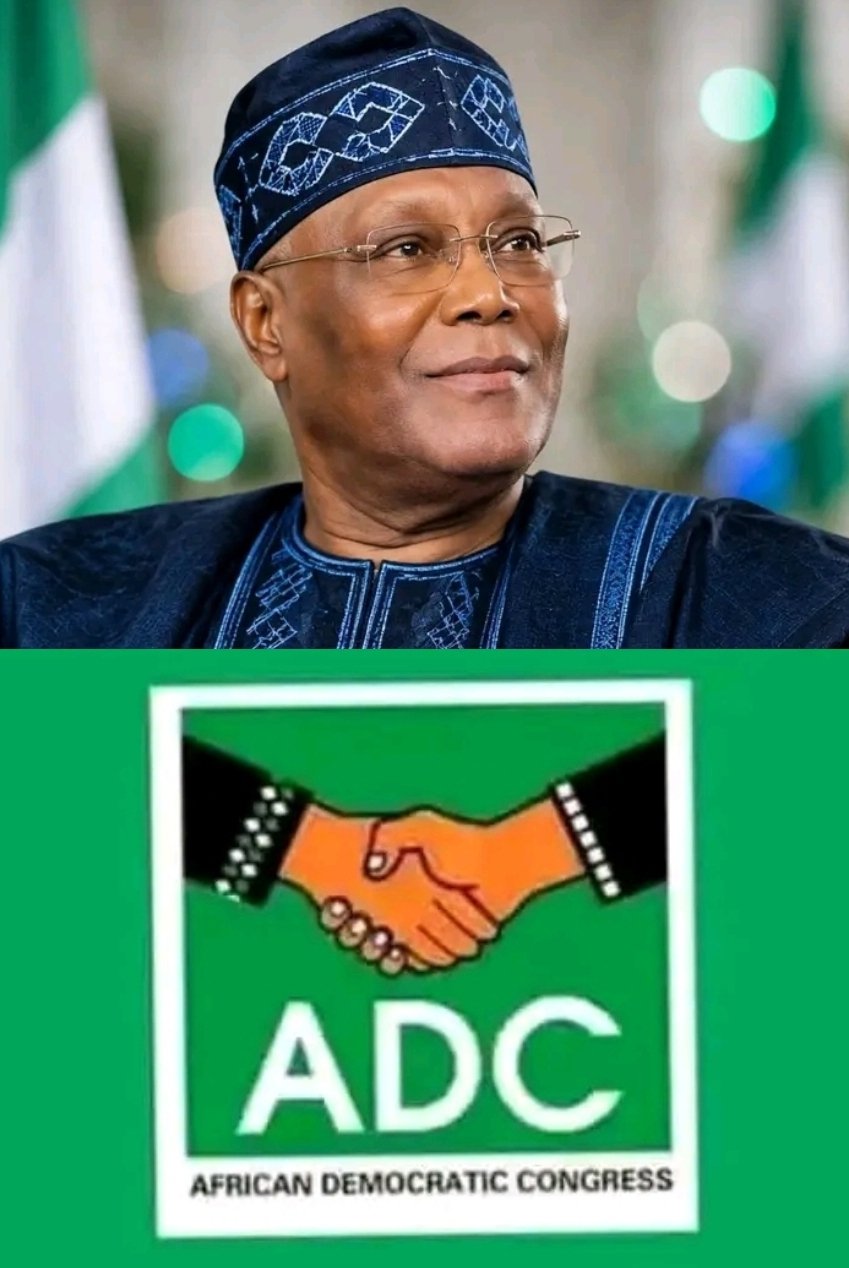
In April 2026, the African Democratic Congress (ADC), alongside prominent opposition figures including former Vice-President Atiku Abubakar and Peter Obi, publicly expressed a loss of confidence in the INEC chairman.
The disagreement followed INEC’s removal of the names of the ADC’s National Working Committee from its website amid a leadership dispute within the party.
INEC reportedly relied on a Court of Appeal order in taking the action, while the ADC argued that the commission had misinterpreted the court’s position.
The party demanded Amupitan’s resignation and questioned his handling of the matter.
However, the existence of the disagreement does not independently establish that INEC acted with political bias.
The appropriate test is whether the commission applied the law consistently, respected judicial decisions and treated all political parties equally.
The matter is particularly sensitive because disputes over party leadership can determine which individuals are recognised as authorised representatives of political organisations during election preparations.
INEC must therefore ensure that its decisions are supported by clear legal reasoning and communicated transparently to affected parties.
ALLEGATIONS OF PARTISAN SOCIAL MEDIA ACTIVITY
Another controversy that has placed Amupitan’s personal neutrality under public scrutiny concerns allegations linking him to a social media account that allegedly published political messages supportive of the ruling All Progressives Congress (APC) during the 2023 elections.
The allegations surfaced in April 2026, with individuals claiming that digital information associated with the account matched contact details contained in Amupitan’s publicly available professional information.
Amupitan’s office denied the allegations, while INEC maintained that the chairman did not own or operate a personal X account and described the purported posts as fabricated.
As of the latest reports reviewed for this investigation, the allegations had not been established through an independent investigation or judicial determination.
Consequently, they should not be presented as proven evidence of political partisanship.
Nevertheless, the controversy illustrates the extraordinary scrutiny that accompanies the office of INEC chairman.
The commission’s leadership must understand that public confidence depends not only on actual neutrality but also on demonstrable impartiality.
An electoral umpire must avoid circumstances that create reasonable doubts about his independence.
Where allegations threaten the credibility of the institution, transparent and independently verifiable clarification is preferable to political exchanges and blanket denials.
AI TECHNOLOGY: A NEW INEC STRATEGY OR ANOTHER UNPROVEN PROMISE
In a significant development, INEC announced the establishment of a dedicated Artificial Intelligence Division within its Information and Communications Technology Department.
The initiative was disclosed by Amupitan in October 2026 as part of the commission’s preparations for the 2027 elections.
According to him, automated AI auditing tools had been integrated into the results verification process.
The commission also announced a five-pillar AI governance framework with mandatory human oversight.
The initiative is intended to detect irregularities, strengthen cybersecurity and address the growing threat of artificial intelligence-generated misinformation, fabricated results and deepfake videos.
INEC’s strategy also includes upgrading its existing election technology rather than introducing an entirely new system shortly before the 2027 polls.
The commission has announced improvements to BVAS, electronic results management and the authentication of polling-unit results before their publication on IReV.
It has also announced plans for a nationwide mock accreditation exercise in November 2026.
These developments are potentially encouraging.
However, technology should not become a substitute for accountability.
Nigerians will need to know how the AI systems work, how their decisions are audited, who is responsible when errors occur and whether independent experts can assess their performance.
The use of artificial intelligence in electoral administration must also be governed by transparency, data protection, human oversight and clear procedures for challenging incorrect automated findings.
The ultimate question is not whether INEC has established an AI division but whether the technology can prevent manipulation without introducing new vulnerabilities.
ELECTION FUNDING AND OPERATIONAL PREPAREDNESS
The financial and logistical capacity of INEC is another major consideration.
On September 2, 2026, Amupitan raised concerns about the non-release of the full budgetary funds required for the commission’s preparations for the 2027 elections.
He warned that delays in funding could threaten preparations involving technology, operations and election administration.
He also disclosed plans for comprehensive technology audits, penetration testing, system redundancy and disaster recovery arrangements.
This is an important issue because the commission cannot reasonably be expected to deliver flawless elections without adequate and timely funding.
However, financial constraints cannot become a permanent justification for avoidable administrative failures.
INEC must demonstrate that available resources are properly managed, procurement processes are transparent and election materials are delivered to their designated locations on schedule.
It must also provide clear information about contingency arrangements for difficult terrain, riverine communities, insecurity and other logistical challenges.
A credible election is not determined only by what happens inside the polling unit. It begins with planning, procurement, recruitment, training, distribution and coordination.
HOUSE OF REPRESENTATIVES DEMANDS ACCOUNTABILITY
Concerns about INEC’s preparedness have also attracted legislative attention.
On October 28, 2026, members of the House of Representatives called for Amupitan to brief lawmakers on the commission’s readiness for the 2027 general elections.
The House subsequently directed its Committee on Electoral Matters to invite the chairman.
The concerns included logistics, technology, security, voter education, personnel training and funding.
The intervention followed a motion sponsored by lawmakers Mansur Manu Soro and Abdussamad Dasuki.
The lawmakers argued that the credibility and acceptability of the 2027 elections would depend substantially on the commission’s preparedness.
Separately, civil society organisations, including ActionAid Nigeria and other partner organisations, called on INEC to provide verifiable evidence of its operational readiness.
They warned that the shortcomings experienced during the 2023 elections remained unresolved concerns in the minds of many Nigerians.
Their demands included transparency in the recruitment of ad hoc election personnel, adequate distribution of electoral materials and independently verifiable logistics arrangements.
The organisations also argued that INEC should publish a comprehensive logistics plan showing how sensitive materials would reach polling units on time.
This is an important accountability demand.
The public should not have to wait until election day to discover whether the commission has adequate vehicles, trained personnel, functioning BVAS devices and reliable communication systems.
CAN INEC POINT TO IMPROVEMENTS UNDER AMUPITAN
Despite the controversies, it would be inaccurate to assess Amupitan’s leadership exclusively through criticism.
The commission has conducted several off-cycle governorship and by-elections since he assumed office.
According to Amupitan’s October 31 account, INEC conducted four major off-cycle elections and 16 by-elections during his first year.
He identified the Anambra governorship election, held shortly after his appointment, as an example of improved administrative performance.
He said the result was concluded and announced within one day, compared with approximately five days during the 2022 governorship election.
He also cited subsequent elections in the Federal Capital Territory, Ekiti and Osun as opportunities for the commission to improve its operations.
INEC’s ability to learn from these exercises is important.
Nevertheless, the performance of a commission during individual off-cycle elections does not automatically establish its capacity to conduct a nationwide presidential election.
The 2027 general elections will involve significantly greater logistical demands, security challenges, political competition and technological pressure.
The ultimate assessment must therefore consider independently verified election-day performance, results management, dispute resolution and stakeholder confidence.
THE INDEPENDENCE QUESTION: CAN AMUPITAN RESIST POLITICAL PRESSURE
One of the most fundamental issues surrounding INEC is its constitutional independence.
Under Section 153 of the 1999 Constitution, as amended, INEC is established as an independent constitutional commission.
Its responsibilities include organising, undertaking and supervising elections into various elective offices.
However, constitutional recognition of independence does not automatically guarantee institutional autonomy in practice.
The appointment process, funding arrangements, political pressure, administrative decisions and conduct of individual electoral officials all influence how independence is perceived.
Amupitan must therefore demonstrate that the commission’s decisions are determined by the Constitution, electoral legislation and established procedures rather than the interests of the government in power or opposition politicians.
This includes treating the APC, ADC, PDP, Labour Party and other registered political parties equally.
It also requires consistent enforcement of electoral rules, irrespective of the political influence or status of individuals involved.
The chairman must be prepared to make decisions that may be unpopular with the presidency, governing party, opposition parties or powerful political figures.
That is the practical meaning of electoral independence.
WHAT NIGERIANS SHOULD DEMAND BEFORE 2027
As the countdown to the next general election continues, Nigerians should demand measurable commitments from INEC rather than relying exclusively on public assurances.
First, the commission should publish the final voters’ register with adequate information on the verification and correction process.
Second, it should demonstrate that BVAS and IReV can operate reliably under realistic nationwide election conditions.
Third, the commission should provide transparent information about the authentication, transmission, collation and publication of polling-unit results.
Fourth, the recruitment, training and deployment of electoral officials must be open to appropriate independent scrutiny.
Fifth, INEC should publish clear logistics and security contingency plans, particularly for communities affected by insecurity, difficult terrain and displacement.
Sixth, complaints from political parties and citizens should receive timely, impartial and legally defensible responses.
Finally, the commission should establish credible channels through which journalists, civil society organisations, political parties and ordinary voters can monitor its preparations and obtain accurate information.
Public confidence is built through consistent institutional conduct, not occasional press conferences.
The VERDICT: IS JOASH AMUPITAN’S INEC RELIABLE
The available evidence presents a mixed picture of Amupitan’s leadership.
On one hand, the chairman has acknowledged the electoral trust deficit, introduced technological and administrative initiatives, expanded voter registration and announced measures to strengthen election security and results verification.
The proposed AI governance framework, enhanced results authentication, voter-register verification and nationwide mock accreditation exercise represent potentially positive developments.
On the other hand, unresolved concerns surrounding the preliminary voters’ register, opposition parties’ complaints, allegations questioning the chairman’s neutrality, funding challenges and demands for verifiable operational readiness demonstrate that public confidence remains fragile.
The European Union’s findings on the 2023 elections also provide an important historical reminder of the consequences of poor communication, delayed results transmission and operational weaknesses.
Importantly, no representative nationwide public opinion poll establishing the precise level of Nigerians’ confidence in Amupitan’s leadership was identified in the evidence reviewed for this report. It would therefore be misleading to claim that Nigerians collectively trust or distrust him based solely on political statements and isolated public reactions.
What can be established is that significant questions about INEC’s credibility remain in public and political debate.
Amupitan still has an opportunity to change the narrative before the 2027 general elections.
But that opportunity will depend on his willingness to make the commission more transparent, accountable, independent and responsive to legitimate public concerns.
Nigeria does not merely need an INEC chairman with impressive academic credentials or an electoral commission equipped with sophisticated technology.
It needs an institution that can guarantee equal treatment of political parties, protect the votes of citizens, publish credible results and defend the integrity of the democratic process.
Ultimately, the credibility of Joash Amupitan’s INEC will not be determined by what the chairman promises Nigerians today, but by what the commission delivers when Nigerians go to the polls in 2027.
™️©️ Samuel Abasiekong-Abasiekong, CEO/EiC www.efeederstation.com