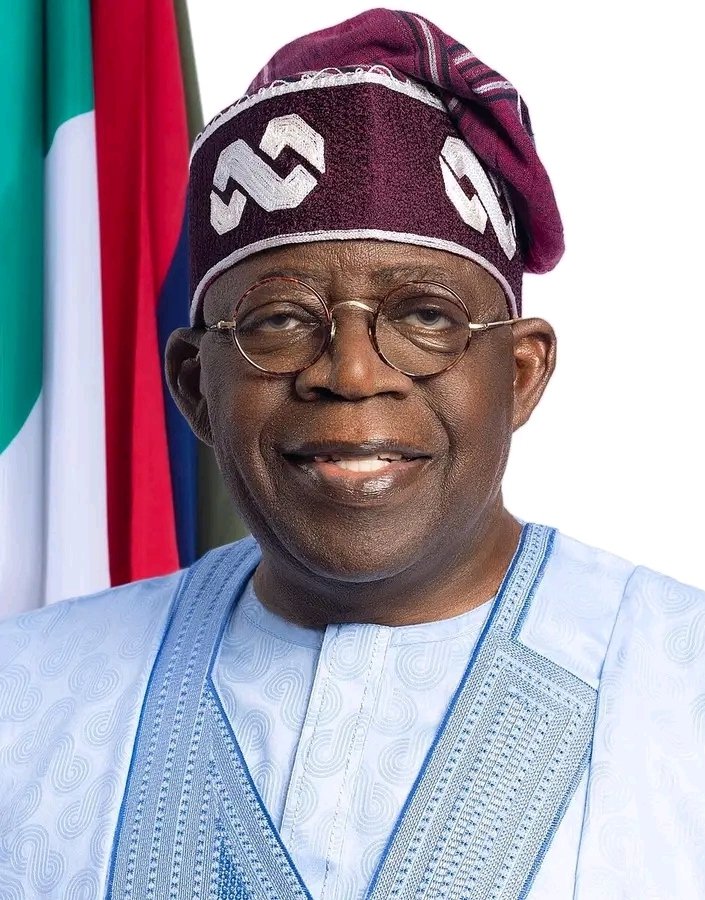
President Bola Ahmed Tinubu has directed the immediate clearance of more than 300 containers of electricity equipment stranded at Nigerian ports, with some reportedly abandoned for between 14 and 20 years, as the Federal Government intensifies efforts to address Nigeria’s persistent power supply challenges.
The Minister of Power, Dr Joseph Olasunkanmi Tegbe, disclosed this on Wednesday, October 28, 2026, while briefing journalists on the outcome of the Federal Executive Council (FEC) meeting presided over by President Tinubu at the State House, Abuja.
According to the minister, the containers contain electricity infrastructure equipment originally imported to support Nigeria’s power sector but left at the ports because of unpaid charges and unresolved customs clearance procedures.
Tegbe described the prolonged abandonment of the equipment as unacceptable, particularly given the country’s longstanding electricity challenges and the urgent need to strengthen its transmission infrastructure.
He explained that President Tinubu had directed the Federal Ministry of Power to work closely with the Nigerian Ports Authority (NPA) and the Nigeria Customs Service (NCS) to resolve the outstanding issues and facilitate the immediate release of the containers.
The minister said the relevant government agencies would reconcile outstanding charges and address administrative bottlenecks responsible for keeping the equipment at the ports for several years.
However, the government does not intend to deploy all the recovered equipment without first establishing its condition and technical suitability.
Tegbe disclosed that qualified technical experts would be engaged to open and inspect the containers, determine the condition of the materials and identify equipment that could still be deployed for electricity infrastructure projects.
He explained that serviceable equipment would be recovered and incorporated into appropriate ongoing power projects, while obsolete or unusable materials would be disposed of through appropriate procedures.
The minister did not disclose the total financial value of the stranded equipment, the amount of outstanding port charges or a specific deadline for completing the clearance exercise.
Tinubu’s Broader Electricity Sector Reforms
The directive comes amid renewed Federal Government efforts to address Nigeria’s electricity supply challenges through transmission infrastructure expansion, financial interventions and the rehabilitation of ageing power facilities.
During the same briefing, Tegbe disclosed that the Federal Executive Council had approved the commencement of procurement for the proposed East and West Super Grids.
The projects are designed to increase Nigeria’s electricity transmission capacity from approximately 5,000 megawatts to 19,000 megawatts within the next two years.
According to the minister, the proposed expansion is intended to strengthen the national grid, improve electricity transmission and enable the country to evacuate more power from generating stations to distribution networks.
The government also approved three major transmission infrastructure interventions targeting electricity bottlenecks around Abuja, Lagos and the Lagos-Shagamu corridor.
One of the projects involves the construction of a 33kV double-circuit underground and overhead transmission line linked to the Katampe Transmission Substation in Abuja.
Another covers the design, manufacture and supply of three 300MVA, 330/132/33kV power transformers for the Ikeja West Transmission Substation in Lagos.
The third involves the reconstruction and upgrading of the 35.6-kilometre Itumola-Mapasin-Shagamu 132kV transmission line from a single-circuit to a double-circuit facility.
Tegbe also disclosed that the government was working to energise completed transmission substations in Kano, Katsina, Bauchi and Gombe to bring previously idle electricity infrastructure into operation.
FG Pays ₦1.23 Trillion to Address Power Sector Debt
The minister further revealed that the Federal Government had paid ₦1.23 trillion out of the approximately ₦3.3 trillion owed to electricity generation companies (GenCos).
The payment is part of efforts to address liquidity challenges in the electricity sector, particularly accumulated debts affecting gas suppliers and electricity generation companies.
Tegbe explained that the financial challenges had contributed to difficulties in securing adequate gas supplies for power generation, further affecting electricity production.
He said the government was pursuing additional measures to improve the financial and operational performance of the electricity value chain.
New National Grid Control Centre
Another major intervention announced by the minister is the construction of a new National Control Centre in Osogbo, Osun State.
The facility is expected to replace the existing control centre, which Tegbe said was built approximately 64 years ago.
The new centre is expected to strengthen real-time monitoring, improve coordination and enhance the management of electricity transmission across the country.
The government is also expanding alternative electricity supply through solar mini-grid projects.
According to the minister, 14 federal universities have received installed and energised solar mini-grids, with capacities ranging from one to five megawatts.
Another 11 universities are benefiting from similar interventions through the Tertiary Education Trust Fund (TETFund), while five teaching hospitals are also receiving solar power installations in collaboration with the Federal Ministry of Health.
Will the Recovery of the Containers Improve Electricity Supply
Although the presidential directive could help recover valuable electricity infrastructure, its actual impact on power supply will depend on the condition, relevance and technical suitability of the equipment.
Equipment that has remained in containers for 14 to 20 years could have deteriorated, become technologically outdated or lost compatibility with existing electricity infrastructure.
Consequently, the proposed technical assessment will be critical in determining the economic value of recovering the materials and whether deploying them would be more cost-effective than procuring new equipment.
The government will also need to establish the original projects for which the equipment was imported, the agencies responsible for the prolonged delays and the financial implications of settling accumulated port charges.
Ultimately, the clearance exercise presents an opportunity to recover potentially valuable public infrastructure that has remained unused for years.
However, Nigerians will be looking for measurable results, including the number of containers successfully cleared, the quantity of equipment recovered, the value of usable materials and the specific electricity projects that will benefit from their deployment.