…The Bigger Picture
FG Summons NLC For Urgent Talks As Strike Deadline Looms Over Wage, Petrol Prices
…The Bigger Picture
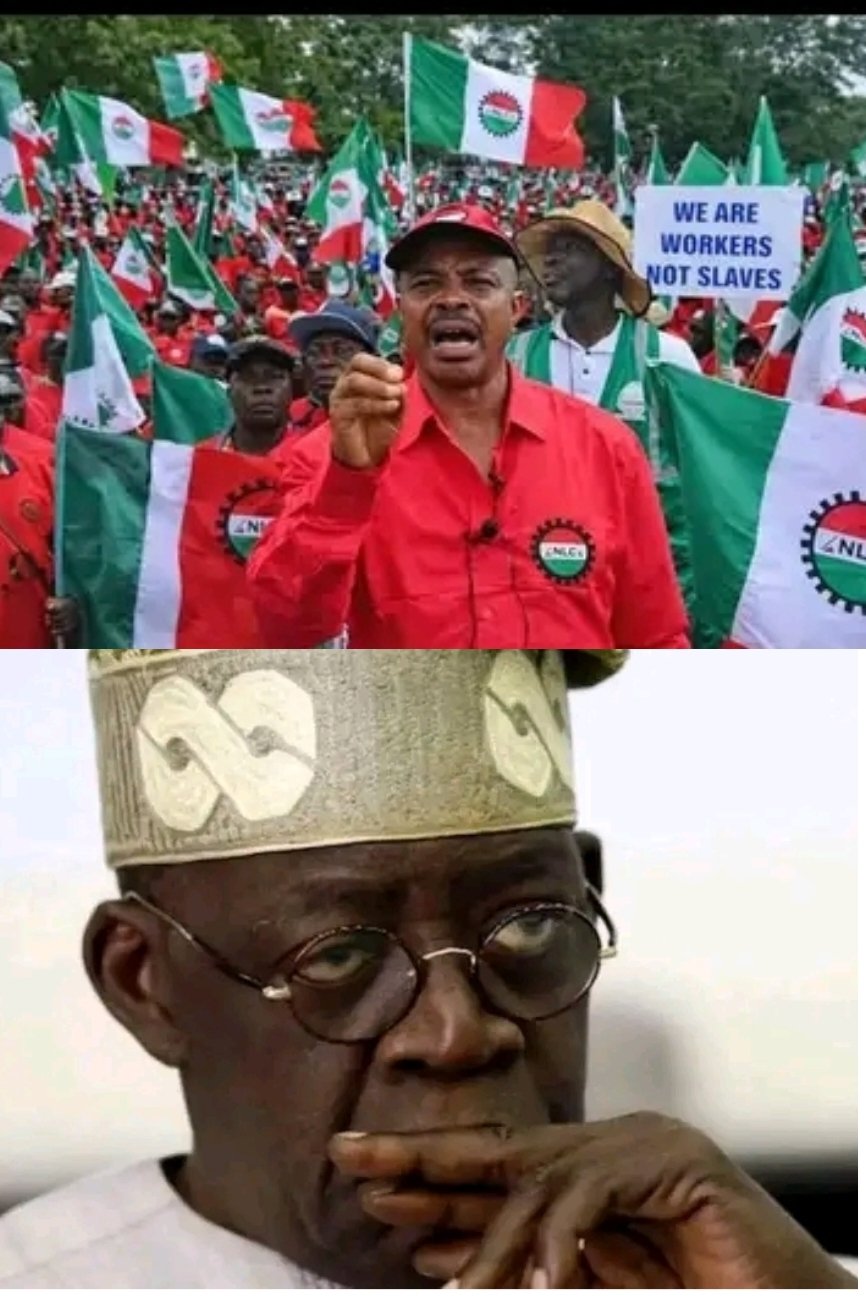
ABUJA, Nigeria: The Federal Government has invited the leadership of the Nigeria Labour Congress (NLC) to an emergency conciliation meeting as tensions rise over workers’ demands for a new minimum wage negotiation, lower petrol prices and immediate relief from the rising cost of living.
The meeting was scheduled for Thursday, October 22, 2026, at 1 p.m. at the office of the Minister of Labour and Employment in Abuja, one day before the October 23 deadline cited in reports on the labour union’s ultimatum.
The invitation comes amid fears of a fresh confrontation between organised labour and the administration of President Bola Ahmed Tinubu if the government fails to address the union’s demands.
According to a report by Vanguard, the Ministry of Labour and Employment convened the meeting to promote dialogue, resolve workers’ grievances and prevent a breakdown in industrial relations.
The ministry’s invitation reportedly followed its earlier correspondence with the NLC concerning the union’s demands and the government’s position on the proposed minimum wage review.
The immediate objective is to bring both parties to the negotiating table and explore mutually acceptable solutions before the dispute escalates into industrial action.
However, the invitation does not, by itself, mean that the government has accepted the union’s demands or that the threatened action has been called off.
NLC’s Two-Week Ultimatum
The current dispute intensified after the NLC issued the Federal Government a two-week ultimatum beginning October 9, 2026, demanding urgent measures to ease the economic hardship facing Nigerian workers.
In a communiqué issued after a joint meeting of its National Executive Council and Central Working Committee, the congress argued that rising prices, currency depreciation and the increasing cost of essential goods had severely weakened workers’ purchasing power.
The union maintained that the ₦70,000 national minimum wage introduced in 2024 was no longer adequate to meet the basic needs of workers and their families.
NLC President Joe Ajaero and the union’s leadership have called for immediate government intervention, warning that continued delays could compel organised labour to take further action.
The congress directed its affiliates and allies to remain prepared for possible decisive action if the government failed to meet its demands within the stipulated period.
The ultimatum covers more than the minimum wage dispute. It also addresses petrol prices, tax relief, wage awards and outstanding agreements affecting public-sector and health-sector workers.
Why the ₦70,000 Minimum Wage Has Become a Flashpoint
Nigeria’s current national minimum wage of ₦70,000 followed negotiations between the Federal Government, organised labour and the organised private sector.
President Tinubu signed the National Minimum Wage (Amendment) Act into law on July 29, 2024, replacing the previous ₦30,000 minimum wage.
Although the increase represented a substantial rise in the nominal amount workers were entitled to receive, the NLC argues that the benefit has been undermined by inflation, the depreciation of the naira and rising transportation, food, housing and healthcare costs.
For many workers, the central issue is no longer simply the amount stated in the law, but what that amount can actually purchase in the current economy.
The union says workers are struggling to afford essential commodities and meet family obligations despite the higher statutory wage.
The disagreement therefore reflects a broader conflict between the government’s legal timetable for reviewing the minimum wage and labour’s demand for an earlier negotiation process and immediate economic relief.
FG Insists New Wage Review Is Due in June 2027
The Federal Government has rejected the demand to commence a fresh minimum wage review immediately, arguing that the current wage arrangement is not due for review until June 1, 2027.
In a response dated October 12, 2026, the Minister of Labour and Employment, Muhammad Maigari Dingyadi, reportedly maintained that the National Minimum Wage Act, 2019, as amended in 2024, provides for a three-year wage review cycle.
The government’s position is that beginning a fresh review barely two years after the implementation of the ₦70,000 minimum wage would be premature and inconsistent with the legal framework.
It has also pointed to existing interventions, including the Presidential Compressed Natural Gas Initiative, food-security measures and other social support programmes, as efforts to cushion the effects of economic hardship.
The government has maintained that it remains committed to dialogue, decent work and workers’ welfare, and that a tripartite committee will be convened at the appropriate time.
The NLC, however, disputes the government’s interpretation of the timetable and insists that commencing negotiations is different from immediately implementing a new minimum wage.
The union argues that preliminary steps, including inviting nominations from government, labour and private-sector representatives, setting the agenda and inaugurating a tripartite committee, should begin well before the current wage arrangement expires.
It says delaying preparations could result in prolonged negotiations and further postpone the implementation of a new wage.
Petrol Prices: Another Major Source of Conflict
Beyond the minimum wage, the NLC has demanded a reduction in the price of Premium Motor Spirit, commonly known as petrol.
The congress wants the government to work towards restoring petrol prices to the levels prevailing when the ₦70,000 minimum wage was signed into law in July 2024.
Labour argues that higher petrol prices increase the cost of transportation and distribution, pushing up the prices of food, manufactured goods and other necessities.
The union says the resulting increases in living expenses have effectively reduced the value of workers’ earnings.
It has also demanded immediate tax relief for workers and the payment of wage awards to cushion the impact of rising living costs.
These demands broaden the dispute beyond salary negotiations, placing the government’s wider economic policies and their effects on households at the centre of the confrontation.
Outstanding Agreements With Health and Public-Sector Workers
The NLC has also called for the implementation of outstanding agreements affecting public-sector employees and health workers.
Among its demands is the implementation of the terms of settlement reached with the Joint Health Sector Unions and Assembly of Healthcare Professionals (JOHESU) on February 5, 2026.
The congress has equally demanded action on unresolved issues raised by the Joint Public Sector Negotiating Council.
Labour considers the implementation of these agreements an important test of the government’s commitment to collective bargaining and the credibility of its negotiations with workers.
Consequently, the conciliation meeting is expected to address several interconnected grievances rather than focus exclusively on the minimum wage.
Why the October 22 Meeting Matters
The meeting represents an important opportunity for the government to prevent the dispute from developing into a wider industrial crisis.
By inviting the NLC leadership before the deadline, the government can seek clarification on the union’s demands, negotiate possible immediate interventions and establish a timetable for resolving outstanding issues.
The discussions could also help determine whether the parties can agree on commencing minimum wage preparations without immediately implementing a new wage.
A possible area for compromise would be an agreed timetable for setting up the tripartite committee, alongside separate discussions on petrol prices, tax relief, wage awards and outstanding labour agreements.
However, such a compromise would depend on the willingness of both sides to make concessions and provide clear commitments.
For the NLC, the critical question is whether the meeting will produce concrete actions and timelines rather than another round of assurances.
For the government, the challenge is to address workers’ grievances while maintaining its position on the statutory wage-review cycle and managing wider economic considerations.
Will the NLC Suspend Its Threatened Action?
The outcome of the meeting is crucial because the union has warned that failure to address its demands could trigger further action by organised labour.
The October 23 deadline has therefore become a significant point in the dispute, although the precise next steps will depend on the NLC’s assessment of the government’s response and any decisions taken by its authorised organs.
An invitation to negotiate should not be interpreted as proof that a strike has been declared, nor does it automatically suspend the ultimatum.
Unless the NLC formally announces a change in its position, workers and the public will remain attentive to the outcome of the talks.
Any agreement will also need to be sufficiently specific to establish what the government will do, which agencies will be responsible and when implementation will begin.
The Bigger Picture
The dispute highlights the difficulties of balancing statutory wage arrangements with rapidly changing economic conditions.
While the government insists that the existing minimum wage should follow its legally prescribed review timetable, labour argues that workers cannot be expected to wait for formal negotiations while their purchasing power continues to decline.
The disagreement also raises questions about the effectiveness of economic relief measures, compliance with wage agreements and the role of collective bargaining in resolving industrial disputes.
For millions of Nigerian workers, the immediate concern is whether their earnings can cover basic household expenses.
The October 22 conciliation meeting could therefore prove decisive in determining whether the government and organised labour move towards a negotiated settlement or enter another period of confrontation.
Ultimately, the significance of the meeting will be measured not by the fact that both parties sat together, but by whether their discussions produce practical relief, credible commitments and a clear path towards resolving the outstanding issues.