The reported attack on the presidential candidate of the African Action Congress (AAC), Omoyele Sowore, in Ado-Ekiti, Ekiti State, has triggered concerns over political violence, the conduct of security agencies and the need for greater maturity in Nigeria’s political engagements.
Sowore alleged that he and members of his team were brutally assaulted by armed men on Friday, October 30, 2026, accusing the Ekiti State Government and operatives of the Department of State Services (DSS) of involvement in the incident.
The activist claimed that the attackers were government-sponsored thugs who allegedly received operational assistance from the DSS, including information about his team’s location.
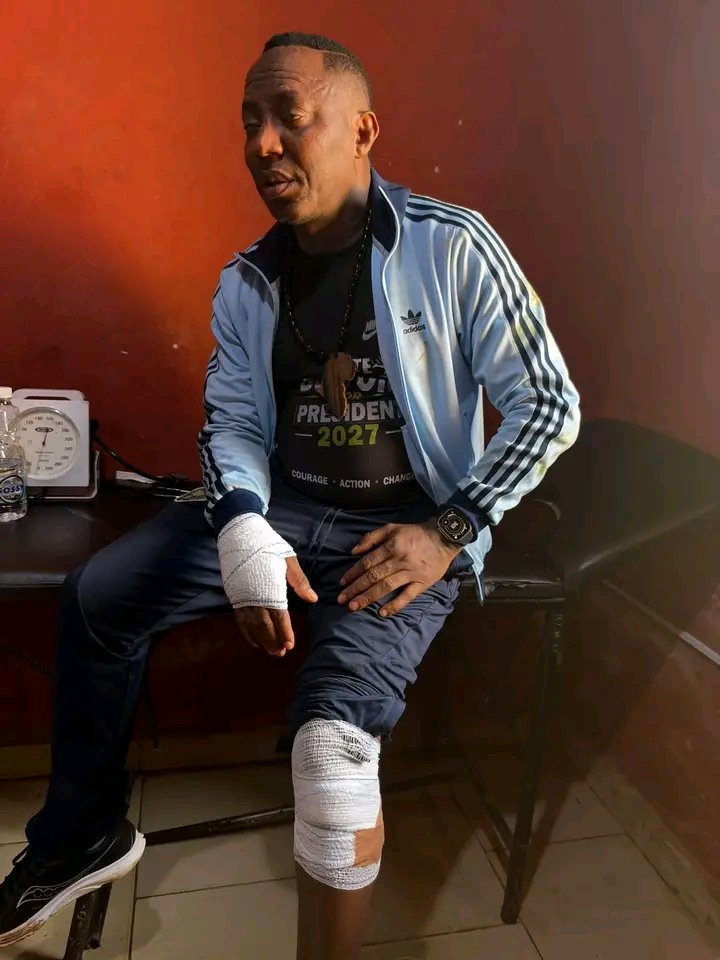
According to reports, the incident occurred at a restaurant in the Dalimore area of Ado-Ekiti, shortly after Sowore had participated in an interview with Midas FM 90.5.
Sowore subsequently shared photographs showing himself and an associate receiving medical attention, insisting that the incident was a deliberate attack rather than an ordinary disagreement.
He also alleged that security operatives seized CCTV footage from the restaurant, claiming that the recordings could help identify those responsible for the assault.
POLICE DISPUTE KIDNAP CLAIMS, ORDER INVESTIGATION
However, the Ekiti State Police Command offered a different account of the incident, dismissing reports that Sowore had been kidnapped.
The Police Public Relations Officer, SP Sunday Abutu, said preliminary information indicated that the AAC presidential candidate was involved in an altercation with some individuals at the restaurant.
The police explained that officers responded to a distress call, rescued Sowore and took him to the Police Hospital in Ado-Ekiti for medical attention.
The command confirmed that he sustained injuries, although it described them as minor.
The Commissioner of Police, Falade Adegoroye Michael, subsequently ordered a discreet investigation to establish the circumstances surrounding the incident, identify everyone involved and ensure that anyone found culpable was prosecuted.
Sowore, however, rejected the police description of the incident as an altercation, insisting that he and his associates were attacked.
As of the latest reports, the DSS had not issued an official response to the allegations of involvement in the incident.
SOWORE URGED TO EXERCISE RESTRAINT
Meanwhile, reactions to the incident have also drawn attention to Sowore’s approach to public communication and political engagement.
While condemning any form of political violence and calling for a thorough investigation, critics have advised the activist to exercise greater restraint when addressing the public.
They argue that Sowore must recognise that political leadership requires more than courage, confrontation and the ability to challenge authority.
According to this position, the outspoken activist must appreciate that times have changed and that his political responsibilities now demand greater maturity, patience, diplomacy and emotional intelligence.
He has also been advised to communicate with his audience without unnecessarily aggressive expressions or language that could be interpreted as commanding or confrontational.
The argument is that strong political convictions can be communicated effectively without resorting to hostility, particularly when addressing sensitive national issues.
INDEPENDENT INVESTIGATION REMAINS CRUCIAL
Beyond the disagreements over how the incident occurred, the most important issue remains the need to establish the truth.
The police investigation should independently examine the CCTV recordings, identify the individuals involved, establish the circumstances that led to the confrontation and determine whether any security agency or government official played a role.
The allegations against the DSS and the Ekiti State Government must not be treated as established facts without credible evidence. Equally, the police should not dismiss Sowore’s account without a transparent examination of the available evidence.
With Nigeria approaching the 2027 general elections, incidents involving opposition politicians and allegations of security agency interference deserve serious attention.
Political disagreements must never become excuses for intimidation, assault or the suppression of legitimate political activities.
Ultimately, Sowore deserves protection and a fair investigation into his allegations, while he and other political actors must also recognise the importance of restraint, responsible communication and peaceful democratic engagement.
The credibility of Nigeria’s democracy depends on both the protection of political freedoms and the willingness of political leaders to conduct themselves with maturity and responsibility.